The 7 a.m. Breakfast Mistake That May Be Tipping the First Domino the Wrong Way
Plenty of “healthy” breakfasts are mostly fast carbs. A 1982 study suggests the first plate of the day can shape how the body handles lunch, four hours later.
Same Lunch. Same People. Only Breakfast Changed.
In a 1982 study, what volunteers ate at breakfast changed their blood sugar rise after the same lunch, four hours later. Researchers call it the second-meal effect, and most people who watch their blood sugar have never heard of it.
Same Plate, Different Order: Why the Order of a Meal May Matter Almost as Much as What’s On It
In a 2015 study, eating vegetables and protein before carbs was linked to a blood sugar rise roughly a third lower in the first hour. It’s one of three small “dominoes,” and the first one falls at breakfast.
Picture a typical weekday morning for a lot of Americans in their fifties and sixties.
Linda is 58. At her last checkup, her doctor looked at her lab results a beat too long and said, “Let’s keep an eye on this.” So she’s been good. Really good. Bran flakes with skim milk. A small glass of orange juice. Whole-wheat toast with a thin layer of jam. The breakfast pictured on the side of the cereal box.
By 10:30 her stomach is growling, so she has a granola bar. Lunch is a turkey sandwich and an apple. And around 2 p.m. it rolls in like weather: heavy eyelids, a foggy head, the urge to put her head down on the desk.
She did everything “right.” She’s been doing it for months. So why does every afternoon feel like a fight she’s losing?
Linda is an illustrative example, not a real person or customer.
If any part of Linda’s morning sounds familiar, here’s something worth knowing. The problem may not be willpower at all. It may be the order the dominoes fall in, starting with the very first bite of the day.
The breakfast that reached forward four hours
In 1982, a team at the University of Toronto led by Dr. David Jenkins (the same group that introduced the glycemic index a year earlier) ran a simple experiment.
Volunteers ate one of two breakfasts with the same amount of carbohydrate. One was lentils. The other was whole-wheat bread. Four hours later, everyone ate the same standard lunch.
After the lentil breakfast, the blood sugar rise after lunch was smaller. Same lunch. Same people. The only thing that changed was what they ate four hours earlier.
Think about that. Breakfast was still at work at lunchtime.
Researchers named it the second-meal effect. It was a small study in healthy volunteers, and the effect is modest. But other teams picked up the thread. At Lund University in Sweden, researchers found that meals with certain fermentable fibers, like those in boiled barley kernels, were linked to steadier blood sugar at the next meal and, in some tests, across much of the day.
So why has almost nobody heard of it? Partly because a bowl of lentils doesn’t come with an advertising budget. And partly because nobody turned it into something a normal person could do on a Tuesday morning.
How a “healthy” breakfast can start the dominoes falling
Look at Linda’s breakfast again. Here’s the frustrating part: it’s mostly fast-digesting carbohydrate, with little protein and almost no fermentable fiber. Some of it is even sold as “heart healthy.”
For many people, that combination means a quick rise, then a dip. The dip brings mid-morning hunger. The snack starts another rise. Then lunch lands on top of it.
The team behind The Anchor Breakfast Protocol calls this chain the Glucose Domino Effect. For a lot of people, the first domino tips the wrong way with the first bite of the day.
The cereal-box morning
Cereal, juice, toast and jam. Mostly fast carbs.
Hungry again. Granola bar.
Lunch lands on top of the second rise.
The slump.
An Anchor Breakfast morning
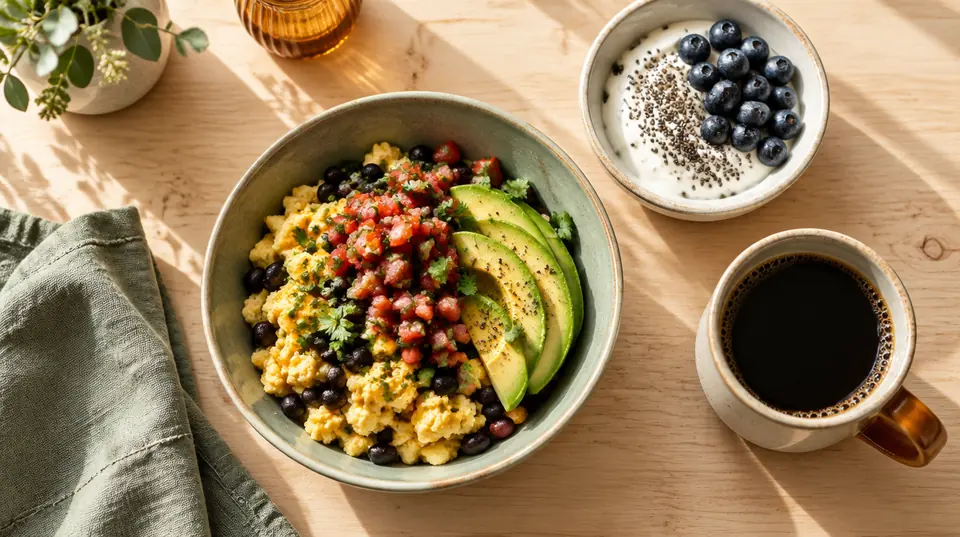
Eggs, black beans, salsa. Protein and slow fiber. About 5 minutes.
Built to digest slowly, so it tends to keep people fuller.
Same lunch, vegetables and protein first.
A 10-minute walk.
Illustrative comparison, not real data. Individual responses vary.
Three meals a day is 21 tests a week. And they aren’t separate. Lose the first one at 7 a.m., and the next ones can get harder.
None of this is anyone’s fault. “Eat less sugar” is advice, not a plan. Nobody hands out instructions for how the meals of a day connect.
Skip ahead and watch the free presentation
Two more dominoes most people never hear about
Breakfast is the first move. Two other small habits have their own research behind them:
- The order food is eaten in. In a 2015 study at Weill Cornell Medicine, 11 adults with type 2 ate the exact same meal on two different days. When they ate the vegetables and protein first and saved the bread and juice for last, their blood sugar was roughly a third lower over the first hour.
- What happens around the biggest meal. Small trials have looked at a little diluted vinegar before a meal and a short walk after it. Each effect is modest on its own. Lined up together, they work like a row of dominoes.
What tomorrow morning could look like
Imagine it. 7 a.m., five minutes at the stove: eggs, a scoop of black beans, salsa. At lunch, the same food you’d normally eat, just vegetables and protein first and the bread last. Then ten minutes around the block.
And at 2 p.m., instead of counting the minutes until you can lie down, you’re paying attention to how the afternoon actually feels. Nobody can promise a specific result, because bodies differ. But it costs about five minutes and two dollars to find out how yours responds.
What goes on the plate tomorrow morning
A short presentation walks through all three moves in plain English: what an “Anchor Breakfast” looks like (most versions take about five minutes and cost around two dollars), the simple order to eat lunch in, and the 10-minute finish that rounds out the day.
It’s not keto. It’s not fasting. It’s not a supplement, and there’s nothing to inject. It’s breakfast, built a certain way, with everyday grocery-store foods.
It also shows the one “healthy” breakfast habit that may be tipping the first domino the wrong way, and why the order you eat lunch in can matter almost as much as what’s on the plate.
The presentation is hosted by Claire, an AI-generated presenter. It’s educational, not medical advice. Anyone taking medication for blood sugar should keep taking it exactly as prescribed and talk with their doctor before changing how they eat.
About 17 minutes. Pour a cup of coffee, turn the sound on, and see what the first domino looks like when it falls the right way.
Watch the free presentation Free to watch. At the end there’s an optional guide, at a launch price of $19.